
How to Properly Write the Kanji '妻': A Corporate Guide
Unlock professional accuracy and cultural respect in Japanese corporate communication by mastering the kanji '妻'.
Master the Kanji NowKey Takeaways
- ✓ The kanji '妻' means 'wife' and is crucial in formal Japanese communication.
- ✓ Correct stroke order is fundamental for legibility and cultural respect.
- ✓ Mistakes can lead to misinterpretation and professional faux pas.
- ✓ Understanding its components ('女' and '又') enhances memorization and context.
How It Works
Break down '妻' into its constituent radicals: '女' (woman) and '又' (right hand). This aids in memorization and understanding its etymological roots.
Familiarize yourself with the precise sequence of 10 strokes. Each stroke has a designated starting point, direction, and stopping point for proper formation.
Utilize stroke order diagrams, animated guides, and practice sheets. Consistent, deliberate practice is essential for developing muscle memory and accuracy.
Incorporate the kanji into relevant corporate communication exercises. Solicit feedback from native Japanese speakers or experienced colleagues to refine your technique.
The Etymology and Significance of '妻' in Japanese Corporate Culture
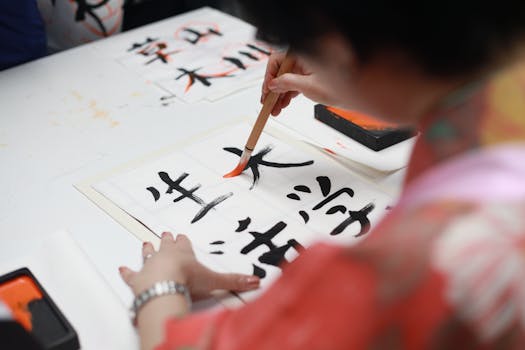 Photo: Engin Akyurt / Pexels
Mastering the 10 Strokes: A Step-by-Step Guide to Writing '妻'
Our partners at pairsjp.com offer related services.
Common Pitfalls and Best Practices for Corporate Kanji Application
Advanced Tips and Avoiding Misinterpretations of '妻'
Comparison
| Aspect | Correct '妻' | Incorrect '妻' (Example 1) | Incorrect '妻' (Example 2) |
|---|---|---|---|
| Stroke Order | 10 strokes, precise sequence | Random/incorrect sequence | Missing or extra strokes |
| Legibility | Clear, balanced, easy to read | Unbalanced, potentially ambiguous | Difficult to decipher |
| Professionalism | High, demonstrates attention to detail | Low, perceived as careless | Very low, reflects lack of effort |
| Cultural Respect | ✓ | ✗ | ✗ |
| Contextual Usage | Appropriate for self-reference (casual/semi-formal) | Misused in formal address (e.g., referring to another's wife) | Misused in formal address (e.g., referring to another's wife) |
What Readers Say
"This guide completely demystified the kanji '妻' for me. The detailed stroke-by-stroke breakdown and cultural context are invaluable for anyone working in a Japanese corporate environment."
Hiroshi Tanaka · Tokyo, Japan"As an expat manager, understanding the subtleties of kanji is critical. This article provided the exact level of detail needed to confidently write '妻' and avoid common pitfalls."
Sarah Chen · New York, NY"Following these instructions, my handwritten '妻' improved dramatically. My Japanese colleagues noticed the difference, which led to smoother project communications and enhanced rapport."
David Kim · Seoul, South Korea"The guide is incredibly thorough, though I wish there were more visual examples of common incorrect forms to help me spot my own mistakes more easily. Still, highly recommended."
Emily Rodriguez · London, UK"I used to struggle with the '又' radical, but the breakdown here made it incredibly clear. This isn't just about writing; it's about respecting the intricate beauty of the language in a business setting."
Michael Wong · SingaporeFrequently Asked Questions
Why is correct stroke order so important for writing '妻'?
Correct stroke order is crucial for several reasons: it ensures legibility, maintains the character's aesthetic balance, and is a fundamental aspect of how kanji are recognized and understood by native speakers. In a corporate context, it reflects attention to detail and cultural respect.
Can I just type '妻' instead of writing it by hand?
While typing is common, certain corporate situations still require handwritten kanji, such as signing formal documents, writing personal notes, or filling out specific forms. Demonstrating proper handwritten kanji, including '妻', shows a higher level of professionalism and cultural appreciation.
How can I practice writing '妻' effectively?
Effective practice involves using grid paper (genkō yōshi), referring to animated stroke order guides, and practicing slowly and deliberately. Focus on one stroke at a time, paying attention to starting points, directions, and ending points. Seek feedback from native speakers to refine your technique.
Are there different levels of formality when using '妻' in corporate settings?
Yes, '妻' is generally used when referring to one's own wife in a semi-formal or casual context. For referring to someone else's wife, polite terms like '奥様' (okusama) or 'ご夫人' (go-fujin) are preferred. For maximum formality or gender neutrality, '配偶者' (haigūsha) is often used.
What are the common pitfalls to avoid when writing '妻'?
Common pitfalls include incorrect stroke order, inconsistent sizing and spacing of the radicals ('女' and '又'), and improper connections or overlaps between strokes. These errors can lead to a character that looks unbalanced, is hard to read, or is perceived as unprofessional.
Who should prioritize learning how to properly write the kanji '妻'?
Anyone engaging in professional communication with Japanese counterparts, especially those involved in corporate diplomacy, formal correspondence, or business development in Japan, should prioritize mastering the proper writing of '妻' and other key kanji to enhance their credibility and cultural fluency.
Does the meaning of '妻' change based on context?
The core meaning of 'wife' remains consistent, but its usage implies different levels of formality and respect depending on whether you are referring to your own wife, someone else's wife, or using it in a general demographic context. Understanding these nuances is key to appropriate corporate communication.
How will mastering '妻' impact my overall Japanese language skills?
Mastering the proper writing of '妻' will significantly enhance your overall Japanese language skills by improving your understanding of kanji structure, stroke order principles, and cultural communication nuances. This precision will translate to better comprehension and more effective expression across the language.
Elevate your professional communication and cultural understanding by mastering how to properly write the kanji '妻'. This skill is not just about linguistics; it's about demonstrating respect and meticulousness in the global corporate arena. Start practicing today to enhance your Japanese business interactions.